
If you follow 2&4 Pets, you know that the Italian Greyhound (Iggy) holds a special place in our hearts. After all, it was Shika, our blue Iggy, who started it all.
The Italian Greyhound boasts a lineage as refined and ancient as the civilisations that first cherished these elegant sighthounds. While some might claim that the breed is one the oldest known to man, the actual origins remain unclear. However, it is widely acknowledged that the earliest purebred dogs very much resembled the Greyhound type.
Believed to be a miniature version of the larger Greyhound family, the Italian Greyhound shares its ancestor's sleek lines and keen hunting instincts but in a much smaller frame. This miniaturisation likely developed through selective breeding aimed at creating a companion animal suitable for indoor living and capable of participating in small game hunts. The breed's smaller size made them especially popular in urban settings, where larger hunting dogs were impractical.
1. Origins and Ancient History
Ancient Origins
The breed's roots can be traced back to the ancient regions of Greece and Turkey. Evidence such as ancient artefacts and writings suggests these dogs were once bred down from the larger Greyhound, known for its noble stature and hunting prowess.
The earliest depictions of similar dogs date back to around 6000 BC at Catal-Huyuk in Turkey, where refined, long-legged dogs adorned hunting scenes were seen in temple drawings.
Miniature bronze statues and detailed tomb paintings dating 2,000 BC, depict slender dogs with a striking resemblance to today's Italian Greyhounds, indicating their esteemed role in these early societies.
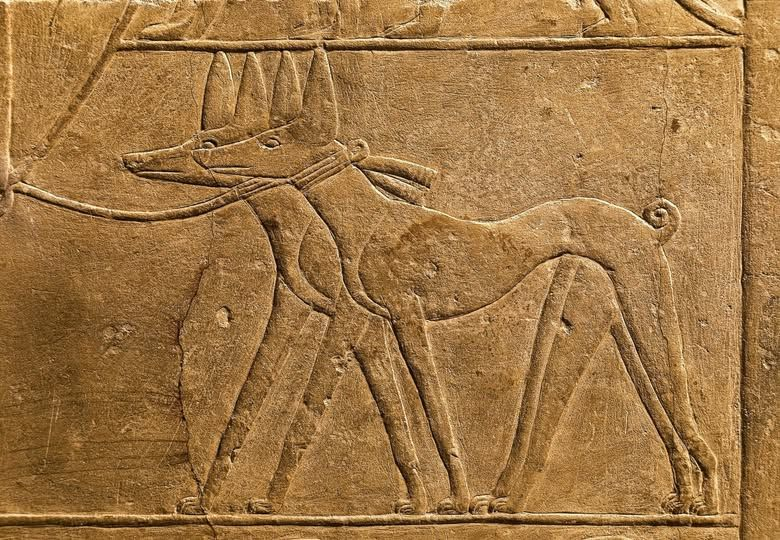
Above: The distinct silhouette of the Tesem (ancient sighthound) in Egyptian art. Note the pricked ears and long legs—traits we still adore today.
The Egyptian Aesthetic
Their significance also extends to ancient Egypt, where mummified remains of similar slender dogs have been discovered, suggesting that they were revered pets. The birth of greyhound was highly celebrated, second only to the birth of a boy. When a Greyhound died, the family would mourn deeply, shaving their heads and fasting.
The shape of these dogs is also frequently depicted in the tombs of Egyptian nobles. Interestingly, the physical characteristics of these dogs bear a resemblance to the Egyptian god Anubis (also known as Anpu), who is depicted with a canine head resembling that of a sighthound.

Above: Ancient Egyptian Deity Anubis
Classical Antiquity
In Greece and Turkey, these dogs were often depicted alongside their owners in scenes of daily life and mythology. The climate and social structure of ancient Greece made them ideal companions for small game hunting. The dogs are often found in archaeological sites across the Mediterranean. The spread throughout this region was likely facilitated by Phoenician traders, who valued the dogs for their grace and utility.
One famous mythology tale involving greyhound had numerous depiction in Greek vase art. In this tale from Ovid, which describes how Aktaion, upon accidentally seeing the goddess Artemis (Diana in Rome) bathing, was turned into a deer by the enraged goddess. Tragically, he was then killed by his own 48 greyhounds, who failed to recognise their master.

Above: Greek Vase Painting: Actaeon (Aktaion) killed by Artemis and the dogs - ca. 470 B.C.

Above: Artemis and Actaeon - Actaeon attacked by his hounds. Detail from a Lucanian red-figure nestoris, Metaponto, ca. 390-380 BC. From the Basilicata.
Evidence of miniature sighthounds can be found in the ruins of Pompeii from 79 AD. Mosaic art was made at the entrance to a building as a warning sigh to say ‘Beware of dog’. Some say to discourage intruders from setting foot, or to prevent visitors from stepping upon small, delicate dogs of the Italian greyhound type.

Above: Mosaic of dog at Pompeii - a ‘Beware of Dog’ warning sign posted at the entrance to a building - 79 AD
2. From Antiquity to Middle Ages
During the Middle Ages, Greyhounds nearly faced extinction but were saved by clergymen who bred them for the nobility. Laws like King Howel of Wales' made killing a greyhound punishable by death, and King Canute’s Forest Laws restricted greyhound ownership to the aristocracy, severely punishing commoners who defied this. Greyhounds symbolized high status, often depicted in noble hunting scenes and aristocratic tombs, embodying knighthood and privilege. This breed's association with the elite was so strong that it was said, "You could tell a gentleman by his horses and his greyhounds.”

Sighthounds unleashed in Paolo Uccello's Night Hunt (Ashmolean Museum) c. 1465–1470
3. The Renaissance Muse
As these dogs caught the eyes of traders and nobles, their elegance made them a staple in aristocratic households across Europe. By the 16th century, this small greyhound received the name "Italian greyhound" due to its extreme popularity with the Italians.
They were prominent figures in Renaissance art. Artists of the Renaissance period often captured these slender agile figures in their works.

Above: A symbol of status and elegance in European courts.
The Italian Greyhound name came to England in the 17th century and became a popular breed for royal families in England, Russia (e.g., Catherine the Great), Denmark, and Prussia as well as for aristocratic ladies. They were frequently depicted in portraits alongside royals, showcasing their popularity and esteemed status.

Above: Catherine the Great and her favourite Iggy Zemira - ca. 1810

Above: Portrait en pied d’Alphonse de Lamartine - 1839

Above: Princess Mary - great granddaughter of Queen Victoria (1897-1965) with her Italian Greyhound
4. 19th Century: Recognition and Challenges
By the 19th century, Italian Greyhounds were well-established in the dog show circuits that began to emerge, gaining recognition as a distinct breed. Their popularity continued to grow, featured in various competitions and becoming a fixture in high society.
However, this period also brought challenges. Efforts to further miniaturise the breed led to health complications, weakening the gene pool due to excessive cross-breeding with other small dog types. Concerns over the breed's vulnerability led to the formation of the Italian Greyhound Club in 1900, which aimed to restore and preserve the breed's original characteristics.

Above: Baroness Campbell von Laurentz founded the club in 1900.
5. 20th Century to Today: Revival and Modern Popularity
The two World Wars nearly brought the Italian Greyhound to the brink of extinction in Europe. Fortunately, breeding stocks in the United States and Canada, where the breed had been introduced in the late 1800s, played a crucial role in the breed's revival post-war.
Today, Italian Greyhounds are cherished not only for their historical significance but also for their adaptability and affectionate nature. They are popular in urban settings due to their small size and relatively low exercise requirements, making them ideal pets for apartment living. They also continue to excel in dog sports such as agility and obedience, showcasing their intelligence and athleticism.
Moreover, genetic studies in recent decades have highlighted the breed's distinct genetic makeup across different continents, emphasising the importance of maintaining genetic diversity to ensure the health and vitality of Italian Greyhounds worldwide.

6. Legacy and Preservation
The legacy of the Italian Greyhound is a testament to centuries of careful breeding and cultural admiration. This breed not only mirrors the history of human civilisation but continues to adapt and thrive in modern times. Efforts to preserve the breed's health and distinctive qualities ensure that Italian Greyhounds will continue to grace homes and hearts for many years to come.
The journey of the Italian Greyhound, from a revered companion of ancient nobility to a beloved modern-day pet, underscores its enduring appeal and the timeless bond between humans and their canine companions.
Shop The Sighthound Edit ➝
Find coats and collars specifically tailored for the unique deep-chested anatomy of your Italian Greyhound.


![[Raisin] Secret | Double Sided 4-Leg Fleece Jumpsuit](http://twoandfourpets.com/cdn/shop/files/image151.jpg?v=1747514046&width=1)
![[Raisin] Secret | Double Sided 4-Leg Fleece Jumpsuit](http://twoandfourpets.com/cdn/shop/files/image151.jpg?v=1747514046&width=600)


